Buy sportcamp.eu ?
We are moving the project
sportcamp.eu .
Are you interested in purchasing the domain
sportcamp.eu ?
domain@kv-gmbh.de · 0541-91531010
Buy sportcamp.eu ?
What intermolecular forces exist?
Intermolecular forces are the forces of attraction and repulsion between molecules. The main types of intermolecular forces include London dispersion forces, dipole-dipole interactions, and hydrogen bonding. London dispersion forces are the weakest type of intermolecular force and occur between all molecules. Dipole-dipole interactions occur between polar molecules, where the positive end of one molecule is attracted to the negative end of another. Hydrogen bonding is a special type of dipole-dipole interaction that occurs when hydrogen is bonded to highly electronegative atoms like oxygen, nitrogen, or fluorine. **
What are intermolecular interactions?
Intermolecular interactions are the forces of attraction or repulsion between molecules. These interactions play a crucial role in determining the physical and chemical properties of substances. Examples of intermolecular interactions include hydrogen bonding, van der Waals forces, and dipole-dipole interactions. These forces can affect properties such as boiling and melting points, solubility, and viscosity. **


Similar search terms for Intermolecular
Top-Angebote
Products related to Intermolecular:
-
LightInthebox Men's Outdoor Hiking Style Sneakers, Rugged Athletic Lace-Up Shoes for Men, Adventure Street Style for Hiking, Travel, Training Outdoor ActivitiesMaterials:Suede; Season:Spring,Summer,Fall,All Seasons; Gender:Men's; Size Suggestion:standard size, select your usual size; Toe Shape:Round Toe; Style:Casual,Vintage; Outsole Materials:Rubber; Occasion:Daily; Closure Type:Lace-up;...42,99 $*Shipping: 6,99 $Secure redirect to the provider
-
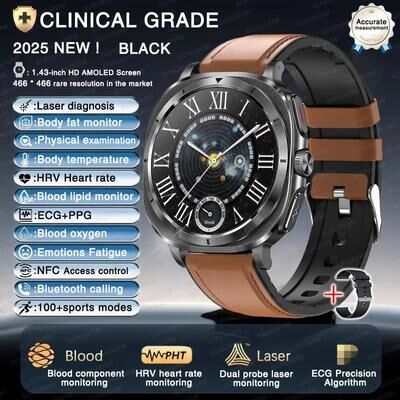
Inspire Select 2025 AMOLED ECG Smart Watch Bluetooth Call NFC Fitness & Wellness Tracker redStay connected while tracking your daily wellness with this advanced ECG smart watch designed for fitness, health monitoring, and smart convenience. Featuring a premium AMOLED smartwatch display, Bluetooth calling, NFC support, and intelligent...279,98 $*Shipping: 0,00 $Secure redirect to the provider
-
Inspire Select 2025 AMOLED ECG Smart Watch Bluetooth Call NFC Fitness & Wellness Tracker brown LeatherStay connected while tracking your daily wellness with this advanced ECG smart watch designed for fitness, health monitoring, and smart convenience. Featuring a premium AMOLED smartwatch display, Bluetooth calling, NFC support, and intelligent...293,96 $*Shipping: 0,00 $Secure redirect to the provider
-
Inspire Select 2025 AMOLED ECG Smart Watch Bluetooth Call NFC Fitness & Wellness Tracker black LeatherStay connected while tracking your daily wellness with this advanced ECG smart watch designed for fitness, health monitoring, and smart convenience. Featuring a premium AMOLED smartwatch display, Bluetooth calling, NFC support, and intelligent...293,99 $*Shipping: 0,00 $Secure redirect to the provider



-
What are intermolecular forces?
Intermolecular forces are the attractive forces that exist between molecules. These forces are responsible for holding molecules together in a liquid or solid state. There are several types of intermolecular forces, including hydrogen bonding, dipole-dipole interactions, and London dispersion forces. These forces play a crucial role in determining the physical properties of substances, such as their boiling and melting points, as well as their solubility and viscosity. **
-
How are intermolecular forces classified?
Intermolecular forces are classified into three main categories: dispersion forces, dipole-dipole forces, and hydrogen bonding. Dispersion forces are the weakest type of intermolecular force and are caused by temporary fluctuations in electron distribution within molecules. Dipole-dipole forces occur between polar molecules and are stronger than dispersion forces. Hydrogen bonding is the strongest type of intermolecular force and occurs when hydrogen is bonded to highly electronegative atoms like oxygen, nitrogen, or fluorine. **
-
What are strong intermolecular interactions?
Strong intermolecular interactions are attractive forces between molecules that are stronger than typical van der Waals forces. These interactions can include hydrogen bonding, dipole-dipole interactions, and ion-dipole interactions. Strong intermolecular interactions play a crucial role in determining the physical properties of substances such as boiling point, melting point, and solubility. They are important in various biological processes, such as protein folding and DNA replication. **
-
Which intermolecular interactions are possible?
Intermolecular interactions that are possible include hydrogen bonding, dipole-dipole interactions, and London dispersion forces. Hydrogen bonding occurs when a hydrogen atom is bonded to a highly electronegative atom such as oxygen, nitrogen, or fluorine. Dipole-dipole interactions occur between molecules with permanent dipoles, while London dispersion forces are the weakest intermolecular interactions and occur between all molecules due to temporary fluctuations in electron distribution. These interactions play a crucial role in determining the physical properties of substances such as boiling and melting points. **


What are intermolecular interactions in chemistry?
Intermolecular interactions are the forces of attraction or repulsion between molecules. These interactions play a crucial role in determining the physical properties of substances, such as boiling point, melting point, and solubility. The main types of intermolecular interactions include hydrogen bonding, dipole-dipole interactions, and van der Waals forces. These interactions are weaker than chemical bonds within a molecule, but they still significantly impact the behavior and properties of substances. **
Which intermolecular forces are the strongest?
The strongest intermolecular forces are hydrogen bonding, which occurs when a hydrogen atom is bonded to a highly electronegative atom such as oxygen, nitrogen, or fluorine. Hydrogen bonding is stronger than dipole-dipole interactions and London dispersion forces. This is because hydrogen bonding involves a particularly strong attraction between the partially positive hydrogen atom and the partially negative atom it is bonded to, leading to a higher energy of interaction compared to other intermolecular forces. **
Top-Angebote
Products related to Intermolecular:
-
Universal Stock Smart Watch With Bluetooth Calling ECG PPG Fitness And Wellness Tracking Smart Watch With Bluetooth Calling ECG PPG Fitness And Wellness TrackingStay connected and keep everyday wellness insights close at hand with the 1 pc of MT200 health monitoring smartwatch. Its crisp 1.43inch approx 466 x 466 AMOLED touchscreen makes calls, notifications, activity stats, and watch faces easy to view....119,97 $*Shipping: 0,00 $Secure redirect to the provider
-
Inspire Select 2025 AMOLED ECG Smart Watch Bluetooth Call NFC Fitness & Wellness Tracker blueStay connected while tracking your daily wellness with this advanced ECG smart watch designed for fitness, health monitoring, and smart convenience. Featuring a premium AMOLED smartwatch display, Bluetooth calling, NFC support, and intelligent...279,98 $*Shipping: 0,00 $Secure redirect to the provider
-
LightInthebox Men's Outdoor Hiking Style Sneakers, Rugged Athletic Lace-Up Shoes for Men, Adventure Street Style for Hiking, Travel, Training Outdoor ActivitiesMaterials:Suede; Season:Spring,Summer,Fall,All Seasons; Gender:Men's; Size Suggestion:standard size, select your usual size; Toe Shape:Round Toe; Style:Casual,Vintage; Outsole Materials:Rubber; Occasion:Daily; Closure Type:Lace-up;...42,99 $*Shipping: 6,99 $Secure redirect to the provider
-
Inspire Select 2025 AMOLED ECG Smart Watch Bluetooth Call NFC Fitness & Wellness Tracker redStay connected while tracking your daily wellness with this advanced ECG smart watch designed for fitness, health monitoring, and smart convenience. Featuring a premium AMOLED smartwatch display, Bluetooth calling, NFC support, and intelligent...279,98 $*Shipping: 0,00 $Secure redirect to the provider
-
What intermolecular forces exist?
Intermolecular forces are the forces of attraction and repulsion between molecules. The main types of intermolecular forces include London dispersion forces, dipole-dipole interactions, and hydrogen bonding. London dispersion forces are the weakest type of intermolecular force and occur between all molecules. Dipole-dipole interactions occur between polar molecules, where the positive end of one molecule is attracted to the negative end of another. Hydrogen bonding is a special type of dipole-dipole interaction that occurs when hydrogen is bonded to highly electronegative atoms like oxygen, nitrogen, or fluorine. **
-
What are intermolecular interactions?
Intermolecular interactions are the forces of attraction or repulsion between molecules. These interactions play a crucial role in determining the physical and chemical properties of substances. Examples of intermolecular interactions include hydrogen bonding, van der Waals forces, and dipole-dipole interactions. These forces can affect properties such as boiling and melting points, solubility, and viscosity. **
-
What are intermolecular forces?
Intermolecular forces are the attractive forces that exist between molecules. These forces are responsible for holding molecules together in a liquid or solid state. There are several types of intermolecular forces, including hydrogen bonding, dipole-dipole interactions, and London dispersion forces. These forces play a crucial role in determining the physical properties of substances, such as their boiling and melting points, as well as their solubility and viscosity. **
-
How are intermolecular forces classified?
Intermolecular forces are classified into three main categories: dispersion forces, dipole-dipole forces, and hydrogen bonding. Dispersion forces are the weakest type of intermolecular force and are caused by temporary fluctuations in electron distribution within molecules. Dipole-dipole forces occur between polar molecules and are stronger than dispersion forces. Hydrogen bonding is the strongest type of intermolecular force and occurs when hydrogen is bonded to highly electronegative atoms like oxygen, nitrogen, or fluorine. **
Similar search terms for Intermolecular
-
Inspire Select 2025 AMOLED ECG Smart Watch Bluetooth Call NFC Fitness & Wellness Tracker brown LeatherStay connected while tracking your daily wellness with this advanced ECG smart watch designed for fitness, health monitoring, and smart convenience. Featuring a premium AMOLED smartwatch display, Bluetooth calling, NFC support, and intelligent...293,96 $*Shipping: 0,00 $Secure redirect to the provider
-
Inspire Select 2025 AMOLED ECG Smart Watch Bluetooth Call NFC Fitness & Wellness Tracker black LeatherStay connected while tracking your daily wellness with this advanced ECG smart watch designed for fitness, health monitoring, and smart convenience. Featuring a premium AMOLED smartwatch display, Bluetooth calling, NFC support, and intelligent...293,99 $*Shipping: 0,00 $Secure redirect to the provider
-
LightInthebox Men's Outdoor Hiking Style Sneakers, Rugged Athletic Lace-Up Shoes for Men, Adventure Street Style for Hiking, Travel, Training Outdoor ActivitiesMaterials:Suede; Season:Spring,Summer,Fall,All Seasons; Gender:Men's; Size Suggestion:standard size, select your usual size; Toe Shape:Round Toe; Style:Casual,Vintage; Outsole Materials:Rubber; Occasion:Daily; Closure Type:Lace-up;...42,99 $*Shipping: 6,99 $Secure redirect to the provider
-
What are strong intermolecular interactions?
Strong intermolecular interactions are attractive forces between molecules that are stronger than typical van der Waals forces. These interactions can include hydrogen bonding, dipole-dipole interactions, and ion-dipole interactions. Strong intermolecular interactions play a crucial role in determining the physical properties of substances such as boiling point, melting point, and solubility. They are important in various biological processes, such as protein folding and DNA replication. **
-
Which intermolecular interactions are possible?
Intermolecular interactions that are possible include hydrogen bonding, dipole-dipole interactions, and London dispersion forces. Hydrogen bonding occurs when a hydrogen atom is bonded to a highly electronegative atom such as oxygen, nitrogen, or fluorine. Dipole-dipole interactions occur between molecules with permanent dipoles, while London dispersion forces are the weakest intermolecular interactions and occur between all molecules due to temporary fluctuations in electron distribution. These interactions play a crucial role in determining the physical properties of substances such as boiling and melting points. **
-
What are intermolecular interactions in chemistry?
Intermolecular interactions are the forces of attraction or repulsion between molecules. These interactions play a crucial role in determining the physical properties of substances, such as boiling point, melting point, and solubility. The main types of intermolecular interactions include hydrogen bonding, dipole-dipole interactions, and van der Waals forces. These interactions are weaker than chemical bonds within a molecule, but they still significantly impact the behavior and properties of substances. **
-
Which intermolecular forces are the strongest?
The strongest intermolecular forces are hydrogen bonding, which occurs when a hydrogen atom is bonded to a highly electronegative atom such as oxygen, nitrogen, or fluorine. Hydrogen bonding is stronger than dipole-dipole interactions and London dispersion forces. This is because hydrogen bonding involves a particularly strong attraction between the partially positive hydrogen atom and the partially negative atom it is bonded to, leading to a higher energy of interaction compared to other intermolecular forces. **
* All prices are inclusive of VAT and, if applicable, plus shipping costs. The offer information is based on the details provided by the respective shop and is updated through automated processes. Real-time updates do not occur, so deviations can occur in individual cases. ** Note: Parts of this content were created by AI.